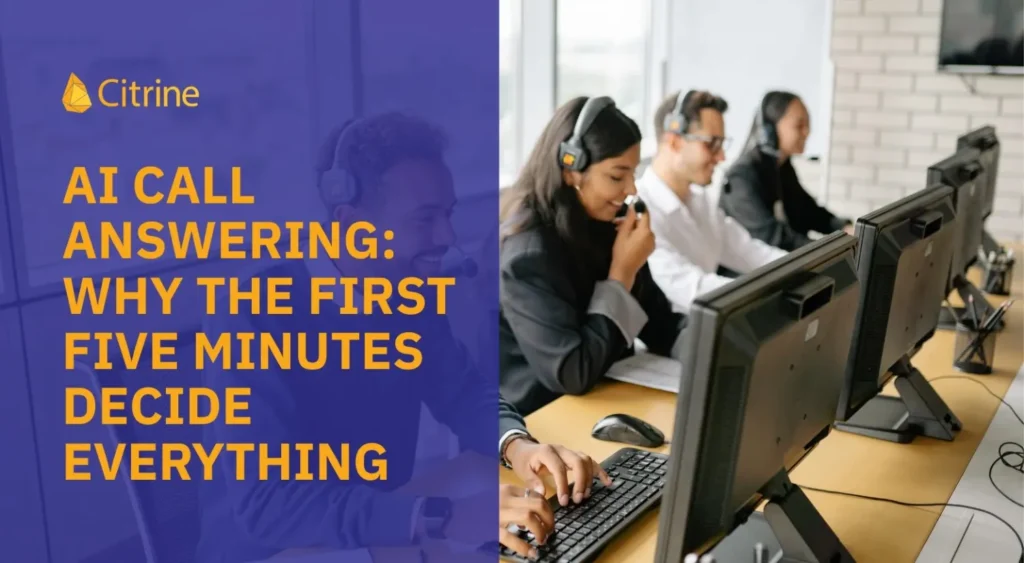
AI Call Answering: Why the First Five Minutes Decide Everything
When someone reaches out to a service business, they aren’t just asking a question. They’re signaling urgency. A broken AC. A flooded kitchen. A repair that can’t wait. In those moments, silence doesn’t feel neutral—it feels like abandonment.
This is where the story begins.
A phone rings.
A voicemail is left.
And somewhere within the next five minutes, trust is either formed or quietly lost.
This is why AI Call Answering has become such a critical factor for modern service businesses. Not because it replaces people—but because it ensures presence when presence matters most.
Why do customers contact multiple businesses at the same time?
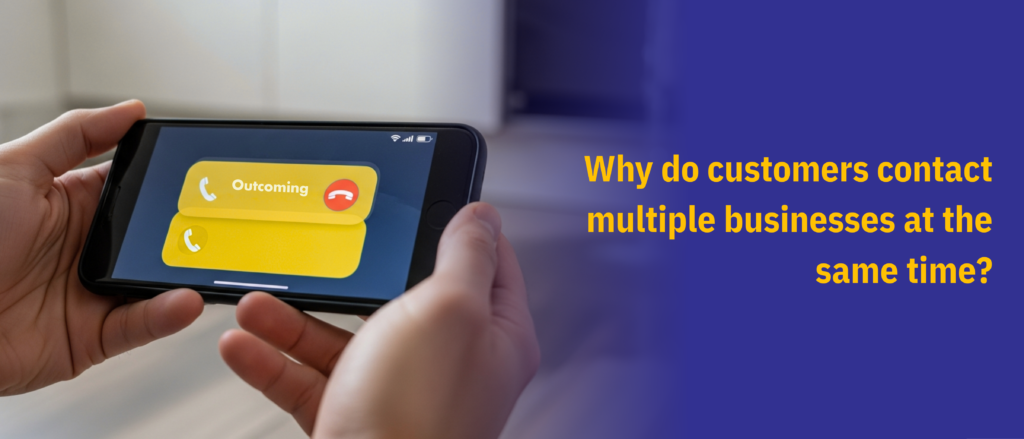
Because they have to.
When customers face an urgent problem, they rarely wait for one response. Instead, they contact three to five businesses within minutes. This isn’t impatience or disloyalty—it’s practicality. They want reassurance that help is on the way.
How the first response breaks comparison mode
The first business to respond immediately does something powerful: it removes the customer from comparison mode. Once a conversation begins, the need to keep searching fades. Momentum replaces uncertainty.
That behavior explains why fast, automated call response has become essential. It ensures the first interaction happens while urgency is still alive—not after it cools.
What happens when a business responds too late?
Often, the opportunity ends before it truly begins.
Delayed callbacks don’t lose customers because of pricing or service quality. They lose customers because attention has already shifted elsewhere. Once another business steps in, the original call is forgotten—quietly and permanently.
How missed calls turn into missed revenue
Over time, missed calls turn into missed jobs. Slow follow-ups erode trust before any real conversation takes place. Eventually, this affects close rates, reputation, and customer loyalty.
Response time doesn’t just influence conversions. It reshapes how customers perceive reliability.
Are you aware?
Most missed calls are never retried by the customer. Once attention shifts, the opportunity rarely re-enters the pipeline.
Citrine 360 Insights
AI Call Answering prevents silent revenue loss by replacing delayed callbacks with an immediate system-led response.
Why do the first five minutes matter so much?
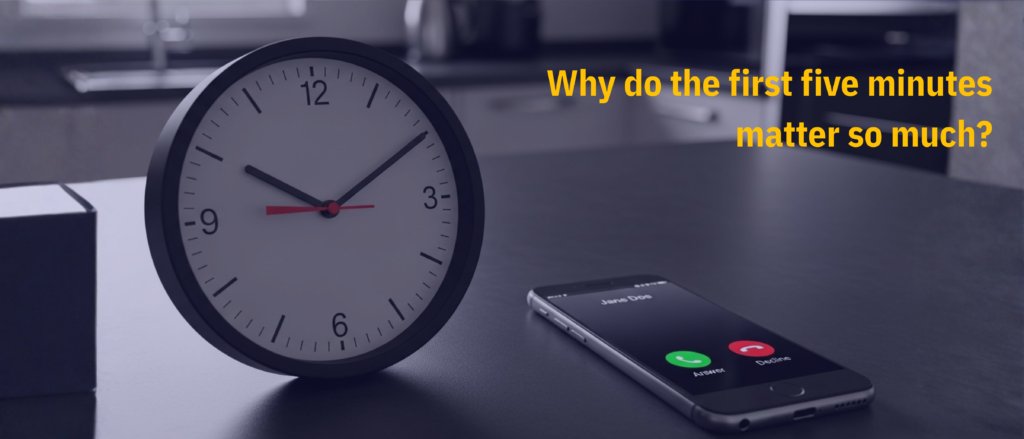
Because five minutes is the psychological tipping point.
During this short window, customers remain focused on their problem. After it passes, urgency drops, doubt increases, and the likelihood of booking declines sharply.
Speed as reassurance, not pressure
Studies consistently show that businesses responding within five minutes achieve significantly higher conversion rates than those responding later.
At this stage, AI Call Answering acts as a safeguard. It acknowledges the customer immediately, captures intent, and prevents silence from breaking trust.
Speed isn’t aggressive. It’s reassuring.
Did you know?
Leads contacted within five minutes are significantly more likely to convert than those contacted later, regardless of industry or service complexity.
Citrine 360 Insights
AI Call Answering safeguards this window by ensuring acknowledgment happens before urgency declines.
How does automation improve call response time?
Automation fills the gaps that human availability can’t always cover.
An automated call-answering system ensures every inbound call receives an acknowledgment—even during peak hours or after business hours. Instead of disappearing into voicemail, calls are answered, information is delivered, and next steps are captured accurately.
Consistency without constant supervision
This creates consistency. Customers feel seen, even when a live agent isn’t immediately available. At the same time, teams remain focused without the constant pressure of monitoring every call.
Operational insight
Manual call handling introduces response variability. Automation removes this inconsistency by standardizing first contact across all inbound volume.
Citrine 360 Insights
AI Call Answering converts responsiveness from an individual effort into a repeatable operational standard.
Does automation remove the human touch?
Only when it’s poorly implemented.
Where human connection still matters most
When designed correctly, automation supports human interaction rather than replacing it. It handles the first moment of contact and then passes the conversation forward with context intact. Customers don’t have to repeat themselves, and teams don’t start cold.
With AI Call Answering, the experience feels responsive rather than robotic. Reassurance comes first, followed by human connection when it matters most.
Independent research on AI-driven insight generation during phone calls shows that sentiment analysis and conversation flow monitoring help agents respond more empathetically and effectively.
How does faster response shape customer perception?
Long before any work begins, customers form opinions.
Why responsiveness defines professionalism
Responsiveness often becomes the first marker of professionalism. Reviews frequently mention how quickly a business responded—sometimes even before mentioning pricing or results. Phrases like “called back immediately” or “very responsive” appear repeatedly in positive feedback.
On the other hand, silence creates doubt. It suggests disorganization or lack of urgency, even when that isn’t the case.
This is why AI Call Answering influences reputation just as much as revenue. It shapes the first experience customers remember.
What happens after hours or during busy periods?
This is where many service businesses lose ground.
Maintaining presence when teams are offline
Emergencies don’t follow schedules. Calls arrive after hours, during peak demand, or when teams are already stretched thin. Without a system in place, these moments turn into missed opportunities.
Intelligent call response technology ensures continuity. Calls are answered. Messages are acknowledged. Follow-ups are triggered automatically—keeping the business present even when the team is offline.
That continuity protects trust and prevents communication gaps.
Did you know?
A large share of high-intent service calls occur outside standard business hours, especially in emergency-driven industries.
Citrine 360 Insights
AI Call Answering maintains availability outside working hours without increasing the team’s workload.
How Citrine supports faster, smarter responses
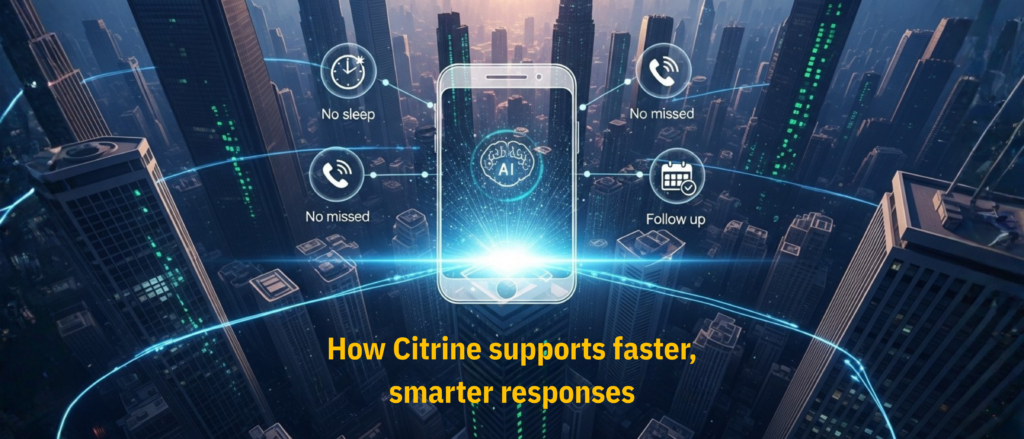
Citrine’s AI Phone Agent doesn’t sleep, doesn’t miss calls, and doesn’t forget to follow up. It answers inbound calls, provides essential information, and can even book appointments in real time.
Missed calls don’t mean missed trust
When a call does go unanswered, Citrine’s Missed Call Text Back activates automatically. The caller receives a message confirming their call was received and that a response is on the way.
It’s fast.
It’s personal.
And it reinforces trust—without adding pressure to your team.
Together, these capabilities ensure AI Call Answering functions as a complete response system rather than a single tool.
Is this approach only for large teams?
Not at all.
Smaller teams often see the greatest impact. Automation absorbs call volume, reduces overload, and ensures consistent response standards without overextending staff. Instead of hiring more people, businesses gain structure.
That structure improves response time, customer experience, and operational clarity—while keeping teams focused and balanced.
Why responsiveness is a long-term strategy
Marketing doesn’t end with lead generation. It continues through every interaction that follows.
Customers remember who showed up when it mattered. Responsiveness builds trust, strengthens relationships, and supports loyalty over time.
Because marketing isn’t just about getting customers today.
It’s about building relationships that last until the next storm—and beyond.
And in that story, AI Call Answering isn’t the hero.
It’s the quiet presence that ensures the hero always arrives on time.
Responsiveness isn’t accidental. It’s designed.
Let’s talk about how Citrine 360 helps service businesses stay present when it matters most.
Frequently Asked Questions About AI Call Answering
1. What is AI call answering used for?
AI call answering automatically handles inbound phone calls, responds to common queries, routes calls, captures caller intent, and supports customer service operations without human agents.
2. How does AI call answering work?
AI call answering uses speech recognition, natural language processing, and intent detection to understand callers and respond to or route calls in real time.
3. Is AI call answering better than voicemail?
Unlike voicemail, AI call answering interacts with callers in real time, answers questions instantly, and reduces missed opportunities caused by unanswered calls.
4. Can AI call answering replace human agents?
AI call answering can handle repetitive and high-volume calls, but complex, emotional, or sensitive conversations may still require human involvement.
5. Is AI call answering secure for business calls?
AI call-answering systems are designed to follow data security and compliance standards, but security ultimately depends on how the system is configured and integrated.
6. Which industries benefit most from AI call answering?
Industries such as customer support, lawncare, snow removal, HVAC repair, home-services, real estate, hospitality, and sales benefit most due to high inbound call volumes and repetitive queries.
7. Does AI call answering support multiple languages?
Many AI call answering systems support multiple languages and accents, depending on the underlying speech recognition and AI models used.