
Marketing Automation for Small Business (2026): Work Smarter, Grow Faster
Marketing automation isn’t about replacing people — it’s about giving small teams unfair leverage.
If you’re running a business with fewer than 20 employees, automation is your silent growth engine. Done right, it saves 10–15 hours per week, increases leads by up to 80%, and improves conversion rates for 77% of users.
Here’s the engaging breakdown — no fluff, just what actually moves revenue.
Why Small Businesses Need Marketing Automation
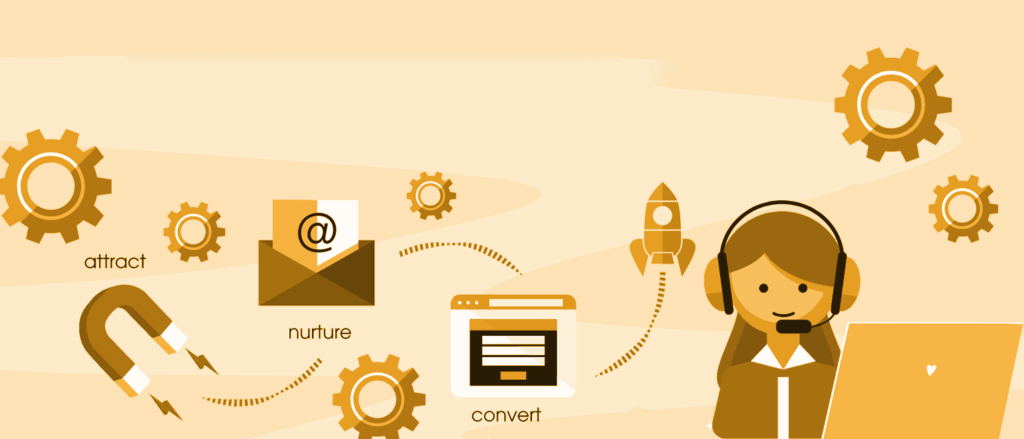
Small businesses compete against companies with:
- 10-person marketing teams
- $500K+ ad budgets
- Agencies on retainer
Meanwhile, most small businesses have:
- One overwhelmed marketer
- Or a founder doing marketing at 10pm
Automation compresses that gap.
If you’re spending 15 hours/week on repetitive execution (emails, posting, reporting), automating 70% of that gives you back 10 strategic hours weekly — without hiring.
That’s leverage.
What Marketing Automation Actually Does
It goes far beyond “scheduled emails.”It can automatically:
- Capture leads and enroll them into nurture sequences
- Recover abandoned carts
- Trigger review requests post-purchase
- Re-engage inactive customers
- Schedule 30 days of social content in one sitting
- Alert you when performance drops
- Generate weekly performance dashboards
In short: execution runs in the background while you focus on strategy and growth.
The 5 Most Impactful Automations for Small Teams
Email Marketing Automation (Highest ROI Channel)
Email returns ~$70 for every $1 spent.
Start with:
- Welcome sequence (3–5 emails)
- Abandoned cart recovery (1hr, 24hr, 72hr)
- Post-purchase sequence
- 90-day re-engagement campaign
Automated email flows generate up to 30x more revenue per send than one-off broadcasts.
If you automate nothing else — automate email first.
Social Media Automation
Consistency beats creativity.
Automation allows you to:
- Batch create and schedule 4 weeks of posts
- Auto-monitor brand mentions
- Use AI to draft captions
- Auto-respond to common DMs
Modern AI-native tools go beyond scheduling — they create and publish content based on performance trends.
Content Marketing Automation
Content is a long-term asset. Automation helps by:
- Generating first drafts in minutes
- Repurposing 1 blog → 5 posts → 1 email → 1 video script
- Monitoring SEO rankings
- Suggesting updates
Result: 60–80% reduction in content production time.
Lead Nurturing Automation (Critical for B2B)
Most leads don’t buy immediately.
Automation:
- Segments by industry/behavior
- Sends relevant case studies and insights
- Scores leads
- Alerts sales when intent spikes
Companies using Lead Nurturing automation generate 50% more sales-ready leads at 33% lower cost.
Reporting & Analytics Automation
Small businesses don’t fail because of bad data.
They fail because they don’t look at it consistently.
Automated dashboards can:
- Pull data from ads, email, and website
- Send weekly performance summaries
- Flag anomalies (traffic drop, cost spike, unsubscribe surge)
Winners review revenue and performance daily. Automation makes that a 10-minute task instead of a 2-hour chore.
The ROI Reality
| Metric | Benchmark |
| Lead increase | 80% of users |
| Conversion lift | 77% of users |
| Email ROI | $70 per $1 |
| Automated vs broadcast email | 30x revenue per send |
| B2B sales-ready leads | +50% |
| Lead cost reduction | -33% |
| Content time savings | 60–80% |
For small businesses, automation is usually profitable within 30–60 days.
Choosing the Right Platform
For E-commerce:
- Shopify integration
- Abandoned cart templates
- SMS + email
- Purchase-based segmentation
For B2B:
- CRM integration
- Lead scoring
- Multi-step nurture builder
- Sales alerts
For Local Services:
- Review automation
- Appointment reminders
- Google Business integration
For Everyone:
- Under $500/month
- No IT required
- Fast support
Match tool complexity to team size. Avoid enterprise bloat.
🗓 90-Day Implementation Plan
Days 1–30: Foundation
- Audit time spent on marketing
- Connect CRM/email
- Build welcome + cart + post-purchase flows
- Launch tracking + reporting
Days 31–60: Expansion
- Schedule 4 weeks of social content
- Launch weekly content cadence
- Connect ad dashboards
- Add alerts
Days 61–90: Optimization
- A/B test subject lines
- A/B test ad creatives
- Implement lead scoring (B2B)
- Automate review requests
By Day 90:
- 10–15 hours saved weekly
- Predictable lead flow
- Clear performance visibility
Common Mistakes To Avoid
- Automating before clarifying your message
- Building overly complex flows
- “Set it and forget it” mentality
- Buying enterprise software too early
- Skipping human review on important messaging
Automation amplifies your strategy — good or bad.
What To Automate First (In Order)
- Email welcome sequence
- Abandoned cart or lead nurture
- Social scheduling
- Weekly reporting
- Content drafting
Start simple. Scale later.
Final Thought
Marketing automation is not a luxury for small businesses in 2026.
It’s infrastructure.
With unified platforms like Citrine 360, small businesses can centralize CRM, messaging, lead nurturing, and analytics into one connected system — eliminating tool overload while increasing execution speed.
If your competitors automate and you don’t, they operate with 2–3x your execution capacity at the same headcount.
The difference isn’t team size.
It’s systems.
And the businesses that build smarter systems today will be the ones scaling faster tomorrow.