Automation Workflow: How to Streamline and Scale Your Business with AI
“The first rule of automation is simple: when you apply it to an efficient process, you amplify results. When you apply it to a broken process, you scale the chaos.”
That idea has echoed through business technology conversations for decades.
Now in 2026, with AI embedded into nearly every modern platform, the stakes are higher.
Automation no longer just executes rules.
It learns.
It adapts.
It predicts.
But the core principle remains: automation workflow works best when built on strong foundations.
In this comprehensive guide, we’ll break down:
- What an automation workflow really means
- How it functions behind the scenes
- Where AI changes the equation
- Real-world business use cases
- Implementation best practices
- And how Citrine 360 simplifies it all
Let’s start with the basics.
How Automation Workflow Transforms Business Efficiency
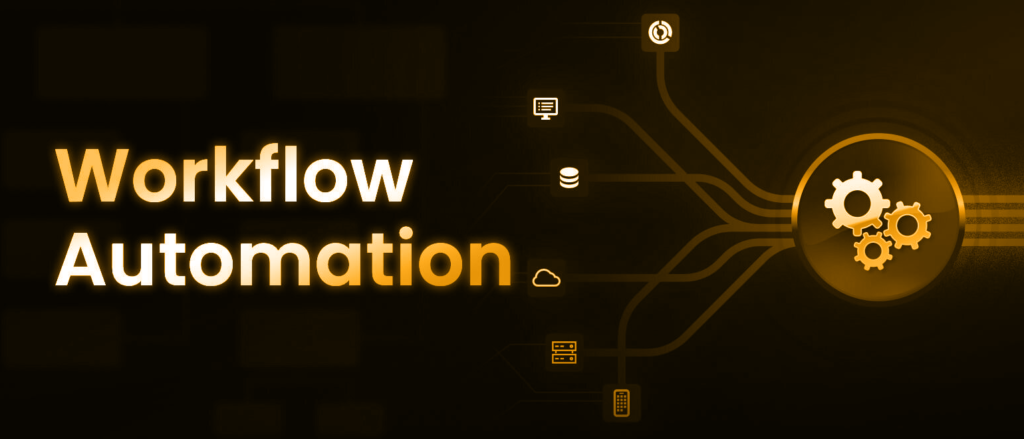
An automation workflow is a structured sequence of tasks that are executed automatically based on defined rules, triggers, and conditions.
Instead of relying on manual handoffs, emails, reminders, or spreadsheets, workflows move forward on their own.
The result?
- Faster execution
- Fewer errors
- Lower operational cost
- Greater scalability
Automation workflows eliminate friction between teams and systems, creating streamlined digital processes that operate with minimal human intervention.
What an automation workflow really means
At its core, an automation workflow is:
A series of connected actions triggered by an event and guided by logic.
It replaces repetitive manual steps with automated execution.
Example:
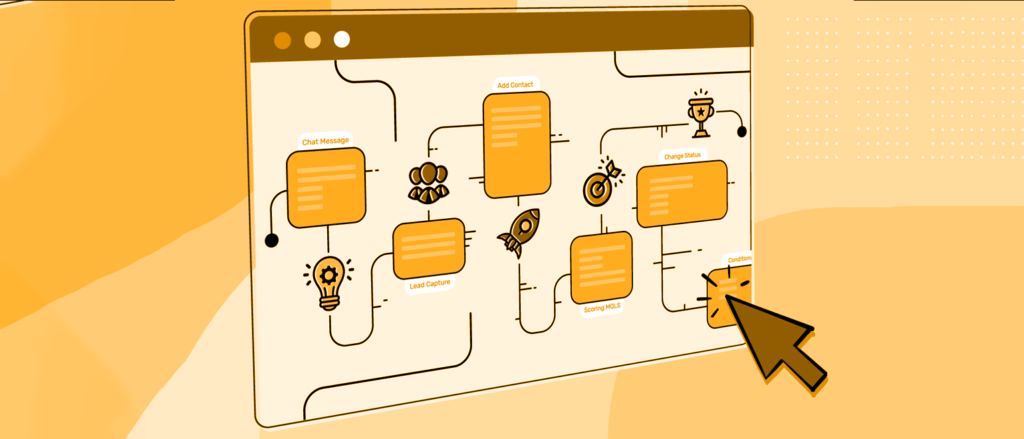
- A prospect fills out a form
- The system assigns the lead
- A confirmation email is sent
- A follow-up task is created
- The lead is scored
- The pipeline is updated
All automatically.
No spreadsheets.
No missed steps.
No bottlenecks.
Why manual processes slow business growth
Manual processes create hidden inefficiencies:
- Delayed follow-ups
- Duplicate data entry
- Human error
- Lost documentation
- Inconsistent communication
As businesses scale, these inefficiencies compound.
Ten manual tasks per day might be manageable.
One thousand per week is not.
Automation workflow eliminates repetitive actions so teams can focus on strategic initiatives rather than administrative maintenance.
How triggers, rules, and actions power automation
Every automation workflow follows a structured framework:
1. Trigger – The event that starts the workflow
Example: A lead submits a contact form.
2. Rules – The “if/then” logic
Example: If the lead source is “Paid Ads,” assign to Sales Team A.
3. Conditions – Criteria that refine behavior
Example: If deal value exceeds $5,000, notify a manager.
4. Actions – The automated outcomes
Example: Send email, assign task, update CRM, send SMS.
This architecture creates consistency and predictability across business processes.
Reducing repetitive tasks across teams
Repetition consumes productivity.
Automation workflow reduces manual work in:
- Sales (lead routing, follow-ups)
- Marketing (email campaigns, segmentation)
- Customer support (ticket assignment, escalations)
- Operations (approvals, reporting)
By automating low-value tasks, teams reclaim hours every week.
Those hours shift toward creativity, strategy, and revenue-generating activities.
Improving accuracy with rule-based workflows
Human error often stems from fatigue and multitasking.
Automation workflows standardize processes by:
- Validating required data
- Applying consistent rules
- Eliminating skipped steps
- Maintaining detailed audit trails
The outcome is improved compliance, cleaner data, and higher operational reliability.
Multi-step automation across sales and marketing
Modern automation workflows connect departments seamlessly.
For example:
- A visitor downloads an ebook
- The system tags them by interest
- A nurture email sequence begins
- Lead score increases based on engagement
- When threshold is reached, the lead routes to sales
- A meeting link is automatically shared
This cross-functional orchestration ensures no opportunity falls through the cracks.
Automation workflow becomes the connective tissue between marketing and revenue.
AI-powered workflows that adapt and learn
Traditional automation relies on static rules.
AI-enhanced automation workflow introduces intelligence.
With AI:
- Lead scoring becomes predictive
- Ticket routing improves based on past performance
- Communication timing optimizes automatically
- Workflows adjust based on behavioral patterns
Instead of rigid logic, workflows evolve.
AI analyzes data continuously and recommends improvements or adjusts flows dynamically.
This creates a self-optimizing operational system.
Automating lead routing and follow-ups
Speed is often the difference between winning and losing a deal.
Automation workflow enables:
- Instant lead assignment
- Automated SMS or email responses
- Follow-up reminders
- Task creation
- Escalation rules
Response time decreases.
Conversion rates increase.
Sales teams operate proactively instead of reactively.
Workflow automation for customer onboarding
Customer onboarding involves multiple coordinated steps:
- Contract confirmation
- Account setup
- Internal team notification
- Welcome email
- Training scheduling
- Documentation sharing
Manual onboarding creates delays and inconsistent experiences.
Automation workflow standardizes the journey, ensuring:
- Every customer receives the same high-quality process
- Internal teams know their responsibilities
- Progress is tracked automatically
This improves customer satisfaction and reduces churn.
Data-driven decision making with real-time dashboards
Automation workflows generate structured data at every step.
With integrated dashboards, businesses can track:
- Task completion rates
- Pipeline velocity
- Conversion ratios
- SLA compliance
- Workflow bottlenecks
Rather than manually building reports, leaders access real-time insights.
Data shifts from reactive to predictive.
Scaling operations without increasing headcount
Growth often creates operational strain.
Automation workflow allows businesses to scale by:
- Handling higher lead volume
- Managing increased support tickets
- Automating internal approvals
- Streamlining repetitive coordination
The same processes work whether you serve 100 clients or 10,000.
Operational efficiency improves without proportional hiring.
The Role of Integration in Modern Automation Workflow
Automation workflows are most powerful when connected to your entire tech stack.
Modern platforms integrate with:
- CRM systems
- Email platforms
- Accounting software
- Marketing tools
- Communication platforms
Integration ensures data flows seamlessly between departments.
No duplication.
No inconsistencies.
No disconnected silos.
Unified systems create unified strategy.
Measuring the ROI of Automation Workflow
Successful automation must be measurable.
Key performance indicators include:
- Reduced process cycle time
- Increased task completion rates
- Improved response time
- Higher revenue per employee
- Decreased operational cost
ROI becomes clear when:
- Errors decline
- Speed improves
- Customer satisfaction rises
- Staff productivity increases
Automation workflow transforms efficiency into measurable business growth.
Best Practices for Implementing Automation Workflow
To implement successfully:
Start Small
Choose one repeatable process first.
Map Before Automating
Document your current process thoroughly.
Involve Stakeholders
Include both technical teams and end users.
Monitor and Optimize
Review workflow performance regularly.
Keep Human Oversight
Automate routine decisions, not critical judgment calls.
Effective automation begins with thoughtful design.
How Citrine 360 Simplifies Automation Workflows with AI
Citrine 360 brings automation workflow, CRM management, AI insights, and communication tools into one unified platform.
With Citrine 360, you can:
- Build automation workflows using intuitive logic
- Automate lead routing and follow-ups
- Connect sales and marketing journeys
- Create multi-step onboarding sequences
- Leverage AI-driven scoring and recommendations
- Visualize performance in real time dashboards
- Scale operations without complexity
Instead of stitching together multiple tools, Citrine 360 centralizes everything inside one intelligent ecosystem.
The result:
- Faster processes
- Fewer manual tasks
- Higher conversion rates
- Improved collaboration
- Sustainable growth
Automation workflow is no longer optional in 2025.
It’s foundational.
Businesses that design efficient processes and layer AI-powered automation on top will scale smarter, operate leaner, and outperform competitors.
The question isn’t whether to automate.
The question is how strategically you build your automation workflow — and whether your system is built to evolve alongside your business.
Frequently Asked Questions
What is an automation workflow?
An automation workflow is a structured series of tasks that execute automatically based on triggers, rules, and conditions to streamline business processes.
How is automation workflow different from simple task automation?
Task automation handles one isolated action. Automation workflow connects multiple tasks across departments into an end-to-end automated process.
How does AI improve automation workflows?
AI enables predictive decision-making, adaptive routing, behavioral analysis, and continuous optimization beyond static rule-based logic.
Can automation workflow scale with business growth?
Yes. Properly designed workflows handle increasing volume without requiring proportional staffing increases.
Is automation workflow suitable for small businesses?
Absolutely. Starting with simple processes and expanding gradually allows businesses of any size to benefit from automation.